
 Demo









The CTR in marketing (click-through rate) is undoubtedly one of the metrics you regularly monitor. But do you really know what it is telling you? Behind this percentage lies much more than just a number: it can reveal signals about the attractiveness of your texts, the relevance of your channels, and measure the effectiveness of your URLs. In this article, you will learn how to interpret it correctly, avoid the most common pitfalls, and use it as a true lever to study and optimize your campaigns, without hasty comparisons or rash decisions.
What exactly does the CTR in marketing refer to?
Before examining or optimizing your click-through rate, it is crucial to start with a clear definition. Let’s go back to the basics to fully understand what CTR actually covers.
CTR: a simple and universal definition
CTR (Click Through Rate), also known as the click rate, refers to the percentage of users who clicked on a link after viewing it.
In other words, it measures the ability of content, a message, or an ad to prompt the user to take action. This figure is used in digital marketing, SEO, and advertising (Google Ads, Facebook Ads, LinkedIn Ads) because it provides an initial, easily accessible measurement of the interest generated.
How is the CTR calculated (without unnecessary complexity)?
Its calculation is based on a simple formula:
👉 CTR (%) = (Number of clicks ÷ Number of impressions) × 100.
For example, if an ad is displayed 1,000 times and generates 10 clicks, the CTR is 1%. This calculation remains the same regardless of the source: email, SEO, Google Ads, social media, or QR code. It is therefore a universal measure, easy to compare as long as the analysis is properly contextualized.
As a general guideline, a CTR of 1% may be relevant for a highly targeted Google Ads campaign, but it can be low for a newsletter aimed at an engaged audience.
Where does CTR practically apply in marketing?
CTR is used in many contexts:
- in email marketing, to assess the interest in a text
- in SEO, to measure the organic click-through rate in Google results (SERP)
- in advertising (Google Ads, Facebook Ads, Display), to evaluate the performance of an ad
- on social media (Instagram, LinkedIn, Facebook)
- through QR codes or physical materials
In all cases, it indicates whether the displayed content is enticing enough to click and allows for comparison of the effectiveness of channels and campaigns.
What is CTR really used for in marketing?
The click-through rate is not an end in itself. When used correctly, it becomes a valuable indicator for understanding the performance of your campaigns and guiding your decisions. However, you need to know what it actually allows you to examine.
The attractiveness signal of your messages
A high rate indicates that your text is relevant, clear, and aligned with your audience’s expectations. Conversely, a low rate may signal an issue with the title, promise, targeting, or display context.
👉 A high CTR means that the user perceives a clear benefit even before clicking.
👉 A low CTR does not necessarily mean ‘poor performance’, but that an element needs to be tested or adjusted.
To evaluate the relevance of a channel or a medium
Checking the click-through rate also helps you understand which media work best for you. Provided you compare like with like, it becomes a useful indicator for identifying the channels where your audience is most receptive. Newsletter, social media, campaign, or physical medium: the figure helps you pinpoint the contact points that generate the most engagement and deserve to be prioritized.
To test and compare your marketing campaigns
The CTR is particularly effective in a testing framework. By comparing the click rate of two texts, two formats, or two media, you can measure what works best with your audience. Over time, it enables you to refine your choices, optimize your campaigns, and base your decisions on concrete data rather than intuition.
What the CTR cannot measure by itself
It measures the desire to click, not the quality of the result after the click. A CTR above average does not guarantee conversion, revenue, or real engagement.
To correctly interpret this figure, it must be cross-referenced with:
- the conversion rate
- the quality of traffic
- the results generated by the landing page
It is this search within a data set that makes it relevant.
Common mistakes in CTR analysis
The CTR is easy to calculate, but more delicate to interpret. Certain errors often recur and can completely skew understanding or even lead to poor decisions.
Comparing figures without considering context
Not all CTRs are created equal. Comparing the click rate of a newsletter with that of a social media post doesn’t make much sense if the exposure context, user intent, and format are different. To be relevant, the figure should always be verified within a comparable framework: same source, same type of text, same objective.
Focusing solely on the percentage, without looking at the volume
A high CTR might seem very positive… until you look at the actual number of clicks generated. Conversely, a lower rate might come with a significantly larger volume of traffic. The percentage alone is not sufficient: it must always be viewed in perspective with the number of impressions and clicks.
Multiplying links without being able to distinguish them.
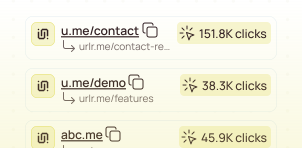
Using the same URL everywhere prevents any fine observation. Without a clear distinction between sources, channels, or words, it becomes impossible to understand what really works. Result: the overall figure loses value and no longer guides decisions.
Jumping to conclusions too quickly
A click-through rate observed over a short period can be misleading. A one-time variation does not necessarily indicate a fundamental trend. Monitoring the CTR over time allows for the identification of real developments and helps avoid hasty adjustments based on insufficient data.
Confusing CTR and overall performance
Finally, one of the most common mistakes is equating a good rate with a successful marketing campaign. The CTR measures the desire to click, not the results generated after the click. Without further research, it cannot, by itself, reflect the overall performance of a campaign.
How to correctly analyze your CTR (the accessible method of our experts)
To derive real insights, you need to approach the rate methodically. The goal is not to track an isolated figure, but to verify what it truly reveals about your campaigns.
Set a clear goal for each URL
Before even calculating your rate, ask yourself: what is this link for? Generating traffic, encouraging sign-ups, informing, redirecting to specific content… A CTR only makes sense if it’s linked to a clear objective. Without this, interpreting results or identifying what needs to be improved becomes difficult.
Precisely identify the channel and context
The same URL can yield very different rates depending on where it is shared. Email, social networks, campaigns, or QR codes: each source has its own codes and expectations. To examine your percentage correctly, you must know exactly where and how your URL is exposed, so you can place the figure in its real context.
Differentiate your URLs for better comparison
To analyze the CTR of your campaigns, you need to differentiate your URLs based on:
- the channel
- the message
- the objective
Using differentiated links (especially through UTM parameters) allows you to reliably compare the performance of your ads, emails, or SEO campaigns and avoid misinterpretations.
Observe the CTR over time
An isolated CTR, observed at a single point in time, provides little information. In contrast, tracking its evolution over time allows you to identify trends, measure the impact of your adjustments, and pinpoint what truly improves engagement. It’s this long-term view that makes the click-through rate truly actionable.
How can you effectively improve the CTR of your links?
Once your click-through rate has been accurately studied, the goal is not to seek a perfect number but to identify the levers that can really make a difference. The good news: they are often easy to activate.
Work on the surrounding text
The CTR heavily depends on the message, title, and context. Clarifying the promise, targeting the right user need, and specifying the expected action can increase the rate without altering the offer.
Adapt the URL to its display context
A URL is never clicked ‘in void.’ Its effectiveness depends on the medium in which it appears: email, social media, web page, or physical support. Adapting the tone, format, and presentation to its context can significantly improve the click-through rate without changing the content of the text.
Refine the call to action
A good call to action helps the reader move to the next step. Rather than a simple ‘click here,’ favor formulations that explain the action and its value. An explicit and reassuring CTA helps alleviate hesitations and guides users more easily towards clicking.
Simplify and make the URL more readable
A long, complex, or hard-to-read URL can hinder clicks, particularly on certain platforms. A clear, identifiable, and understandable URL inspires more trust and facilitates taking action. This simplicity plays a key role, especially on mobile or printed media.
Test, compare, and adjust
Improving the CTR involves testing: test a title, a format, or a lever, compare the rate obtained, then adjust. It is this logic of continuous optimization that allows for better figures over time.
Track and compare your CTR: why the link makes all the difference
To decipher and improve your CTR, you first need to identify exactly where the clicks are coming from. And in this equation, the URL plays a central role.
A unique link for each use, a prerequisite for reliable analysis
Integrating the same link across multiple platforms significantly complicates the examination of the CTR. In this case, it’s impossible to know which channel, text, or medium is truly responsible for the clicks. By creating a distinct URL for each use, you achieve a much clearer reading of your performance and can compare what truly works.
Better track your clicks to better understand your performance
The CTR makes sense when it is associated with clear click tracking. Knowing how many people click, as well as where they click, allows for better interpretation of results and identification of the most effective touchpoints. This visibility is essential for driving your campaigns in an informed manner.
Easily compare your marketing actions over time
Having clearly identified links also facilitates long-term comparisons. You can track the evolution of a campaign’s click-through rate, measure the impact of a text change, or evaluate the performance of a support over multiple periods. The CTR thus becomes a true management indicator, aiding in continuous optimization.
Simplifying the analysis without multiplying the tools
Finally, correctly structuring your URLs avoids complex or fragmented searches. By centralizing the tracking of clicks and CTR, you gain in readability and efficiency without burdening your processes. The URL is no longer just a passing point, but a real analytical support.
Conclusion: the CTR, an indicator to monitor, not an obsession
The CTR is useful as a management signal, not as an end in itself. Are you looking for the average click-through rate? It varies by industry, medium, and type of campaign. The important thing is not to achieve an ideal CTR, but to observe it correctly and integrate it to improve the quality of your campaigns.
To make the most of the CTR, you need to precisely identify your URLs, compare your actions, and track your clicks without complexity. It’s this ability to structure and read the data that transforms a simple percentage into a true optimization lever. Mastering your URLs gives you clarity on your performance… and peace of mind in your marketing decisions.